Resources

Resources

Browse our library of pressure mapping and force measurement resources, including eBooks, Case Studies, On Demand Webinars, Whitepapers, and much more.

Displaying 1 - 10 of 31

Therapeutic Force-Feedback Device Design One company was developing a small force-sensitive physical therapy device aimed at tracking a patient's recovery progress after a specific medical event. Their mission was to empower patients on their journey to recovery by providing an innovative, user...

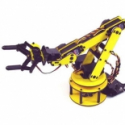
Robotic Force Sensors Force sensors enhance the design of robotic applications by enabling advanced control technology. Force sensors provide a robot with haptic feedback, which allows for better overall performance. This performance includes verifying grip forces, ensuring proper balance, and...

Force Sensors for Sports / Fitness Sports and fitness devices designed with force sensors result in real-time, accurate monitoring devices that can measure both force feedback and pressure distribution. Our thin and flexible sensors allow for a non-intrusive design that can measure both small and...

Background Many rheumatologists perform joint assessments by manually exerting pressure on an area with their thumb or two index fingers to elicit a response. It is generally assumed that fingers will "blanch" at around 4 kg/cm 2 of force, which is then used as a benchmark for the physician to...

Background In high-throughput processing – such as in bottling and food packaging industries – there are several twists, turns and other impacts a product encounters on its way to completion. Quality control personnel take precautions to make sure their systems are running as smoothly as possible...

Ensuring Safety with Force Sensing Controls Background: According to OSHA, the Occupational Safety and Health Association, each year there are roughly 85 forklift fatalities and 34,900 serious injuries. Numerous safety regulations are put in place on an industrial floor to ensure worker protection...

Smart Ambulatory Device designed with FlexiForce™ Sensors Background: According to the present edition of World Population Ageing, globally, the number of older adults (aged 60 or above) is expected to more than double from 841 million people in 2013 to more than 2 billion in 2050. This increase...

FlexiForce™ Sensors Improve Hand Rehabilitation Device In 2013, a group of bioengineers and rheumatoid specialists in Cagliari, Italy designed a low-cost medical device that monitors the hand rehabilitation of patients diagnosed with Rheumatoid Arthritis (RA) and Systemic Sclerosis (SS). The device...

Quantify Grip Forces with FlexiForce™ Accurate grip measurement has become increasingly important in today’s world of continued ergonomic improvement and robotic grip applications. Historically, there have been limitations with grip measurement. Load cells are expensive and bulky; pressure films...

Speech Pathologists Track Progression of Patient’s Speech Therapy with FlexiForce™ Traditionally, speech pathologists evaluate the health of orofacial muscles by asking a patient to contract their tongue against an imposed object, such as a gloved finger. In recent years, pathologists have sought...