Resources

Resources

Browse our library of pressure mapping and force measurement resources, including eBooks, Case Studies, On Demand Webinars, Whitepapers, and much more.

Displaying 1 - 10 of 64
eBook

If you've heard about pressure measurement technology but never fully understood why this information might be important in a gait lab, then this eBook is for you!

Therapeutic Force-Feedback Device Design One company was developing a small force-sensitive physical therapy device aimed at tracking a patient's recovery progress after a specific medical event. Their mission was to empower patients on their journey to recovery by providing an innovative, user...

eBook

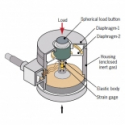
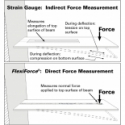
Strain gauges and FlexiForce sensors are resistance based technologies available in a variety of shapes and sizes. FlexiForce sensors provide a flexible, paper-thin solution at only 0.008" (0.2mm) thick. Download a free eBook from Machine Design.

eBook

FlexiForce force sensors are a cost-effective MEMS alternative for sleeker, smaller designs. These thin, flexible, easy-to-integrate sensors are available off-the-shelf or can be customized to meet your specific application requirements. Read our free eBook on the advanta

eBook

Load cells can be bulky, heavy and expensive but FlexiForce load sensors are an unobtrusive and low-cost alternative to load cells. Download this free eBook by Tekscan engineers and Machine Design magazine to learn more about force sensing technologies.

eBook

Download a free e-Book and learn more about selecting a thin, low-power, low-cost force sensor for seamless integration and sleeker designs.

Datasheets & Guides

A single registration provides access to practical resources from the FlexiForce Sensor Integration Knowledge Base

On Demand Webinar

ABSTRACT This lecture describes a digital workflow that aids in transforming complicated occlusion cases into simple restorative cases, by replacing sophisticated analogue equipment with a predictable digital workflow. The full digital workflow includes a variety of digital technologies, techniques...

Application and Case Studies

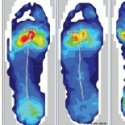
This case study shows how the F-Scan helped optimize orthotics and educate the patient on plantar pressure distribution.

Background Many rheumatologists perform joint assessments by manually exerting pressure on an area with their thumb or two index fingers to elicit a response. It is generally assumed that fingers will "blanch" at around 4 kg/cm 2 of force, which is then used as a benchmark for the physician to...