 Skip to main content


Common Challenges in Battery Pressure Measurement and How Engineers Investigate Them
Understanding battery pressure data requires more than collecting measurements. Engineers must distinguish between normal battery behavior and pressure changes that may indicate a developing issue.
Battery pressure naturally changes during charging and discharging. The challenge is determining when those changes represent expected behavior and when they may point to a mechanical problem.
Challenge #1: Hidden Localized Failure Signals
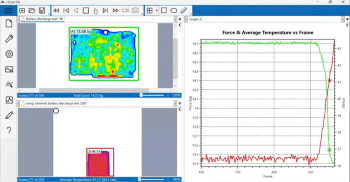
Relying solely on average force measurements can mask localized pressure changes within a battery, making pressure mapping a valuable tool for uncovering insights that might otherwise go undetected.
Potential issues that may be hidden include:
- Localized swelling
- Contact loss
- Delamination
- Increased resistance regions
Challenge #2: Determining What Is Normal
Variation is common during battery testing. Expected observations may include:
- Settling effects
- Tab flexing
- Thermal expansion during cycling
Challenge #3: Identifying Early Mechanical Failure Modes
Several conditions that may appear as batteries cycle:
- Gas-induced swelling
- Delamination
- Connector or tab loosening
- Early indications of internal shorts
Challenge #4: Understanding Edge Effects
Battery edges can become mechanically and thermally stressed. Contributing factors may include:
- Mechanical clamping
- Cell tabs
- Connector frames
- Cooling differences between the center and edge of a cell
Challenge #5: Measuring Long-Term Behavior
Sensor drift may occur during long-duration testing, so accounting for drift when evaluating pressure changes over time can be important.
Conclusion
Understanding where pressure changes occur can help engineers investigate battery behavior more effectively than relying on overall averages alone.
I-Scan™ 10 is Now Available
I-Scan version 10 with the new TekDAQ 220 electronics is more than a hardware update. It delivers a modern product experience that better reflects the sophistication, quality, and market leadership of Tekscan's pressure mapping technology, helping customers clearly understand the value of upgrading or investing in the platform.
Related posts
Post Categories: