Skip to main content

Embedded Force Sensors
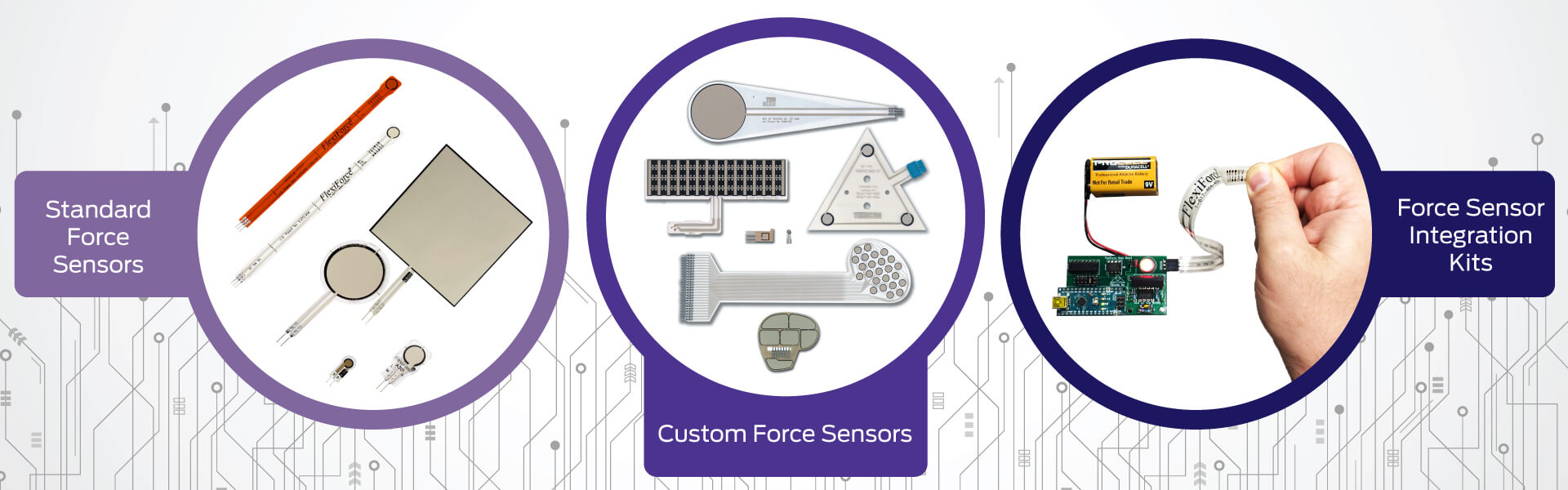
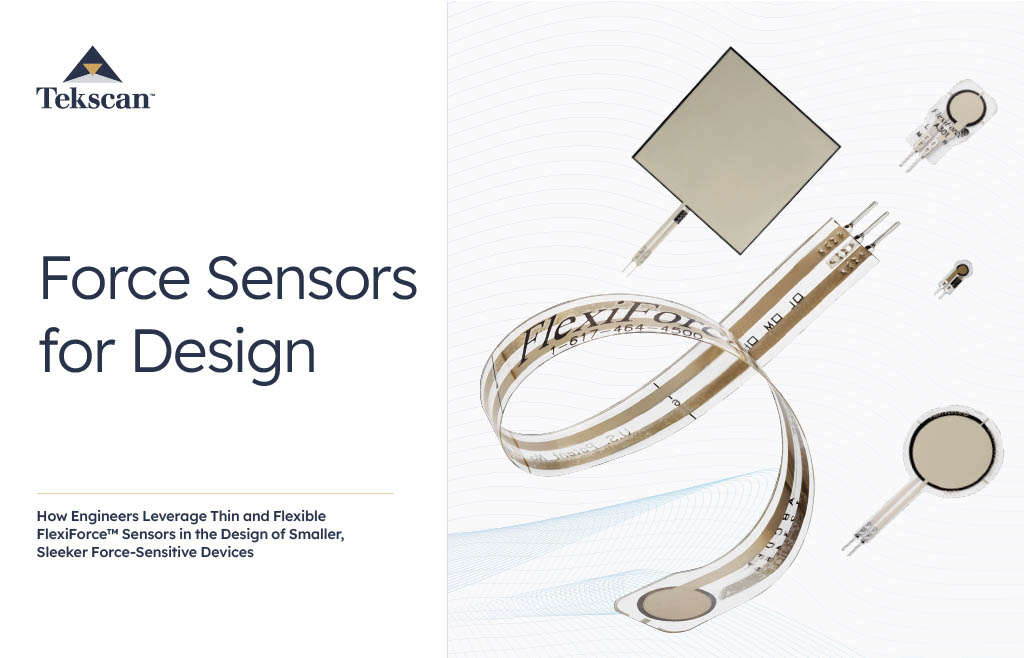
FlexiForce force sensors are ultra-thin and flexible printed circuits, which can be easily integrated into force measurement applications. FlexiForce sensors are available off-the-shelf, or can be customized for unique product designs.
Embedded Sensor Uses
There are 4 key uses for FlexiForce sensors. They detect and measure:
- Force from an applied load - For force-sensitive applications that monitor real-time changes in force – such as a shift in weight, position, or expansion of two contact surfaces. They are especially useful for applications with extremely tight or sensitive space constraints.
- Rate of change of a force load over time - Pairing your FlexiForce sensor with a timing method can create applications that allow the operator or subject to monitor force changes over a time period. This data can be used to gauge perforance, consistency, or expose potential flaws before they happen.
- Force thresholds to trigger appropriate action - FlexiForce sensors can function as a highly-sensitive smart switch to collect data for a communication system. This helps reduce the need for human interaction in for automated system monitoring.
- Detect contact or touch - From damaging impacts, to soft bumps or glances, every touch or contact tells a story. FlexiForce sensors can be your method to capture these moments to better understand and control your device’s operating environment.
Why OEMs Choose FlexiForce Sensors to Embed in Consumer Products
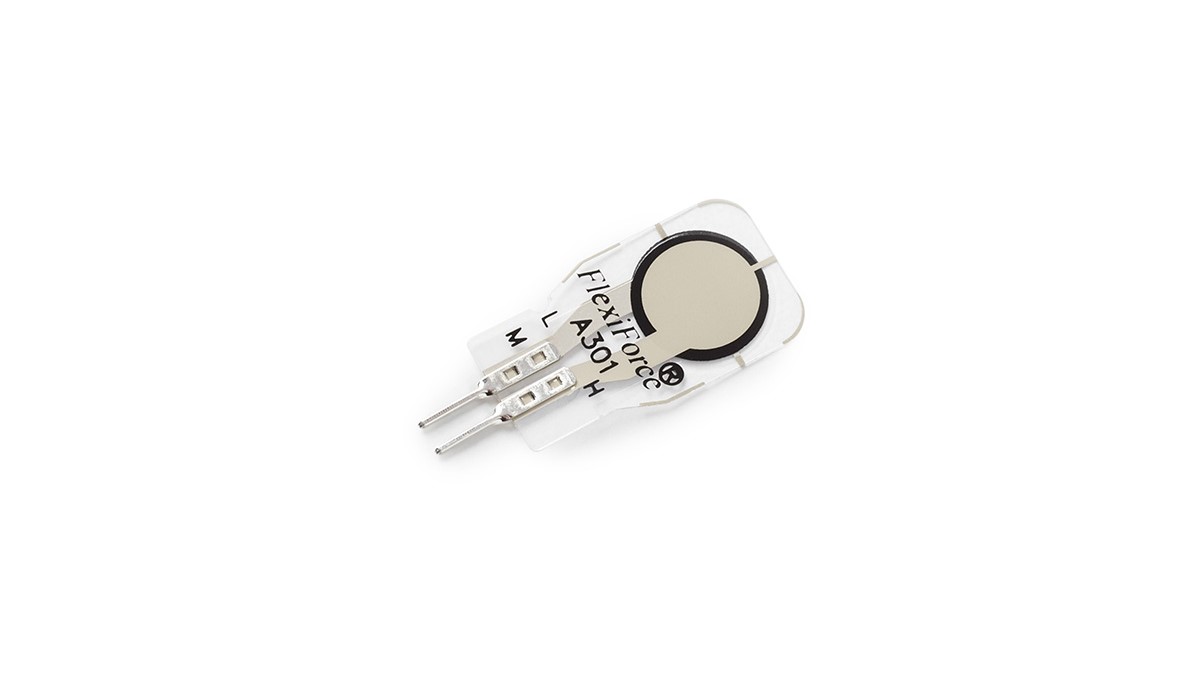
FlexiForce sensors are integrated into countless consumer electronics and medical devices.
Our thin, customizable FlexiForce™ sensors are a cost-effective force measurement solution for consumer products. With our engineering expertise, these sensors can easily be designed into products across various markets.
These customizable sensors can be produced in high quantities with a quick design time. The sensors are ideal for consumer products due to their ability to withstand various storage temperatures and conditions.
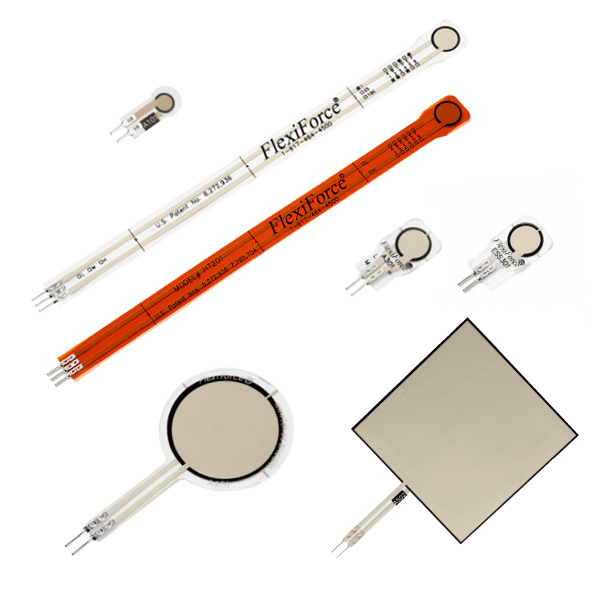
Sensors can be custom designed in a variety of shapes and sizes to meet your application and product needs.
Our embedded sensor solutions provide you with a wide range of value-added products, services, and resources to help make the entire design-in process efficient and economical.
We offer three pressure-sensitive variations to meet your application and product needs: standard, enhanced, and high temperature.
Our dedicated application engineering team is here to ensure a successful product integration. Collaborate design needs in our TactileLab. View our sensor integration resources to get you started.
Our Expertise
Our experienced engineering team works closely with you throughout each stage of the design process to ensure the best sensor design for your application. For customers who need custom application software to complement their sensors, we team up with trusted partners to combine our expertise and develop complete specialized solutions.
In addition to our embedded force sensors, we have a complete product line of sensors for embedded systems that include matrix pressure mapping sensors and product design solutions.
Our Products
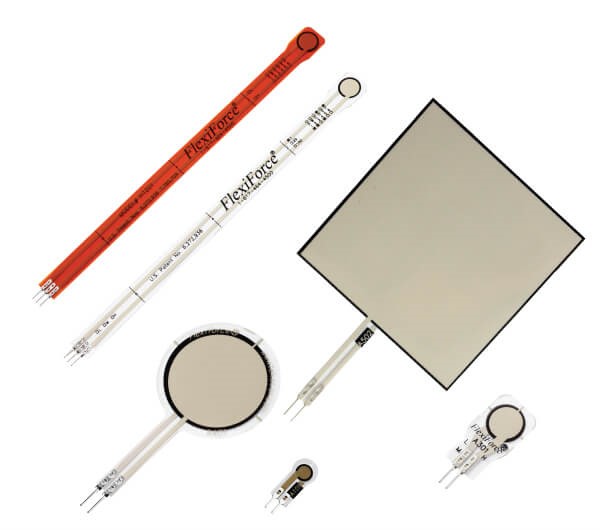
Perfect for prototyping, proof-of-concept, or for embedding into a device. Get started on your R&D, and in high volumes when you are ready to scale up production.
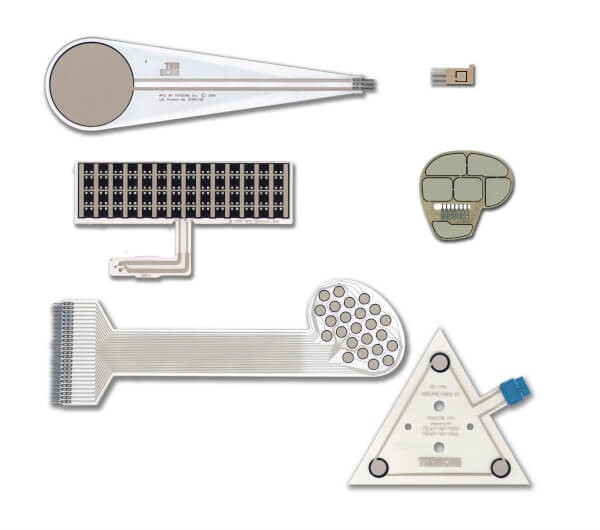
We design custom sensors to your application specs. World class application engineering and design support.
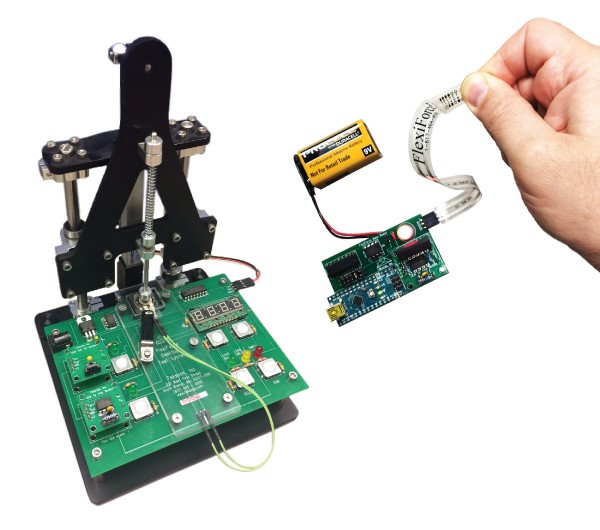
Development tools assist your engineers and designers through all phases of FlexiForce sensor integration.
An Overview of FlexiForce Sensor Technology
Our thin, customizable FlexiForce™ sensors are a cost effective force measurement solution for consumer products. With our engineering expertise, these sensors can easily be designed into products across various markets. These customizable sensors can be produced in high quantities with a quick design time. The sensors are ideal for consumer products due to their ability to withstand various storage temperatures and conditions.
Trusted by Engineers
I was looking for a thin, flexible film to measure force in my device; something that would not interfere with its size. We looked at some competing thin film force sensors but your FlexiForce product was more accurate in terms of feedback and linearity. The technical expertise and product quality were also important for us since we needed to get through the FDA approval process. I would recommend FlexiForce sensors to any design engineer who is looking to measure force feedback without compromising the size or weight of the device
Hank Daniecki, RGD Technologies
Compare Force Sensor Technologies
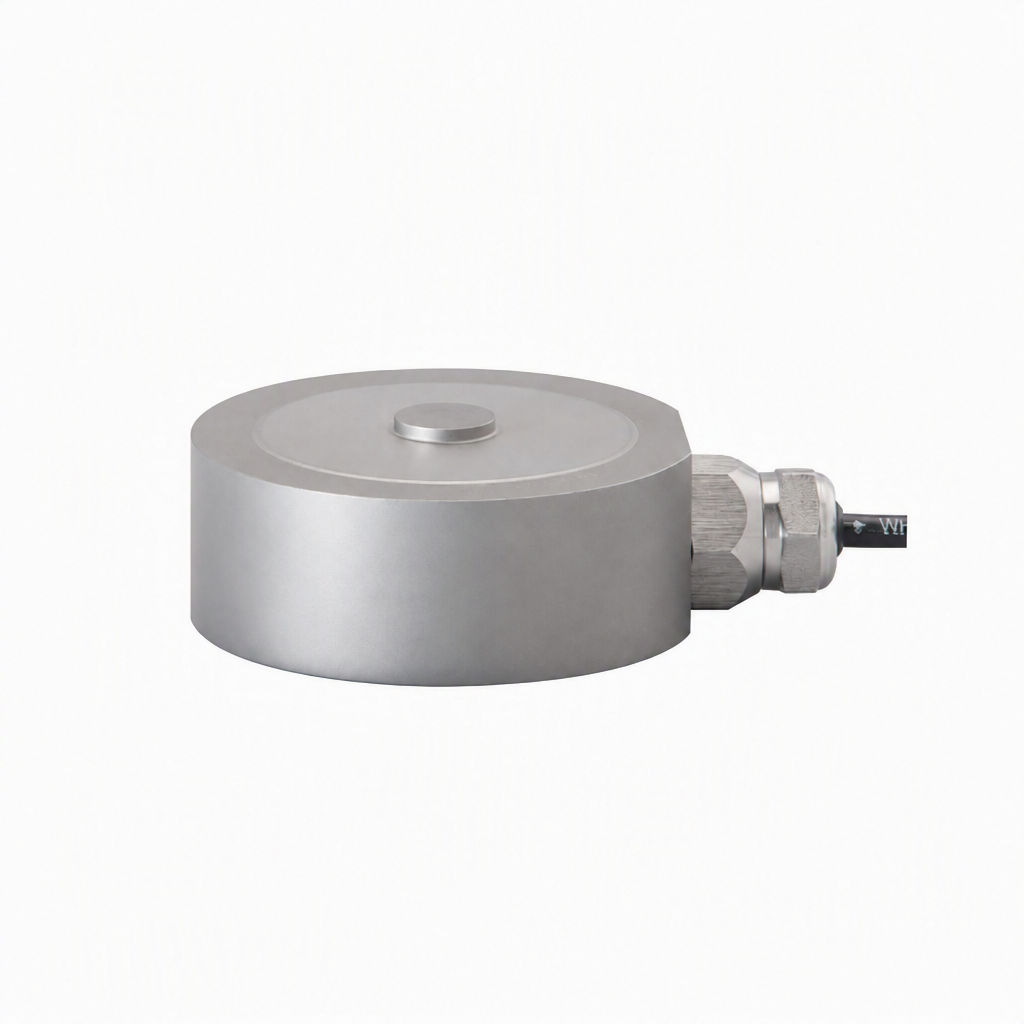
Load Cells
- Accurately measures force load on a single sensing point
- Tend to be bulky and heavy, thus making them difficult to embed into compact spaces or designs
- Require significantly more power than other sensor technologies
- Require routine factory re-calibration
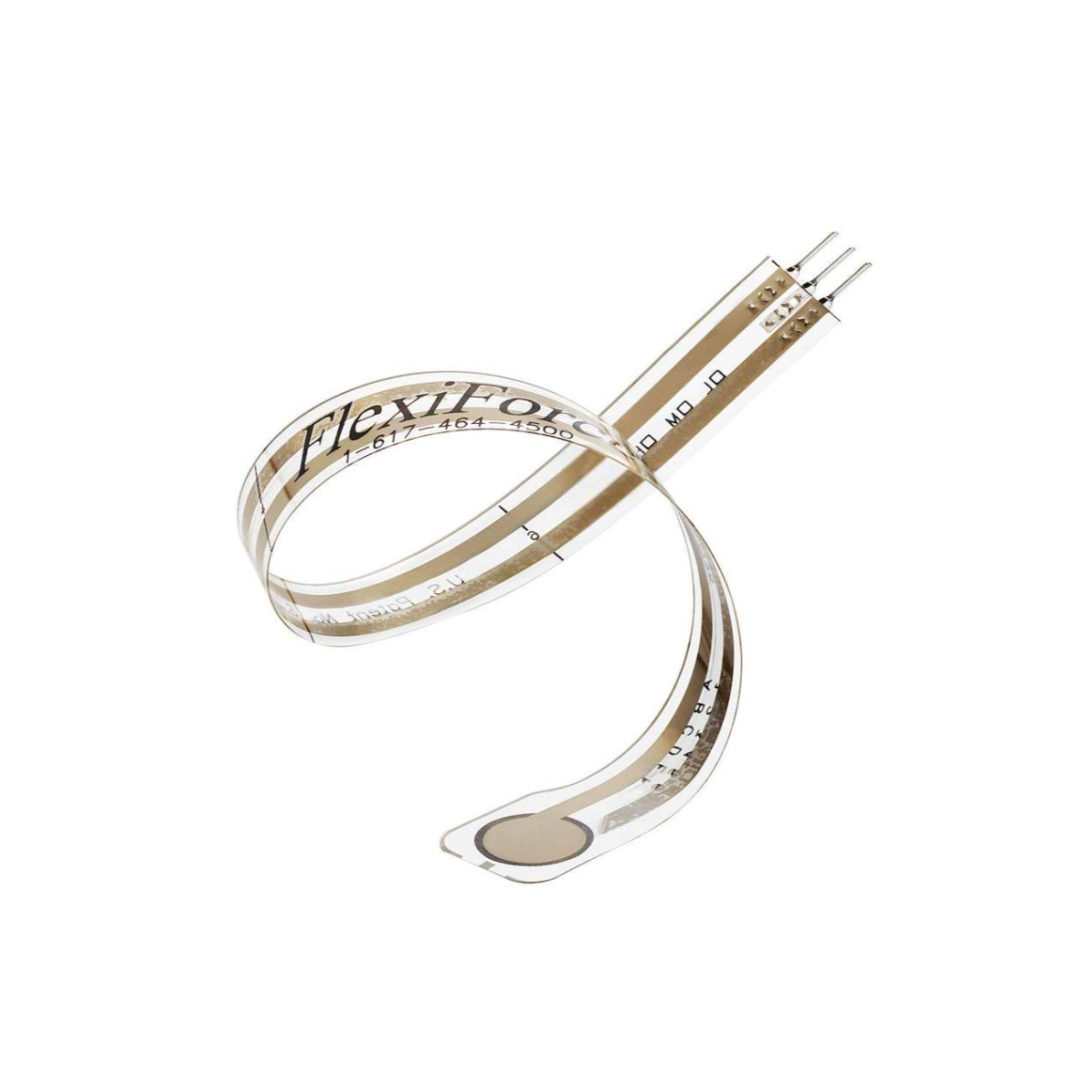
FlexiForce Sensors
- Printed force-sensitive resistors that are used to measure compressive loads
- Ultra-thin, flat and flexible form factor allows them to be embedded into small, compact spaces
- Low power requirements
- Able to function on simple circuitry
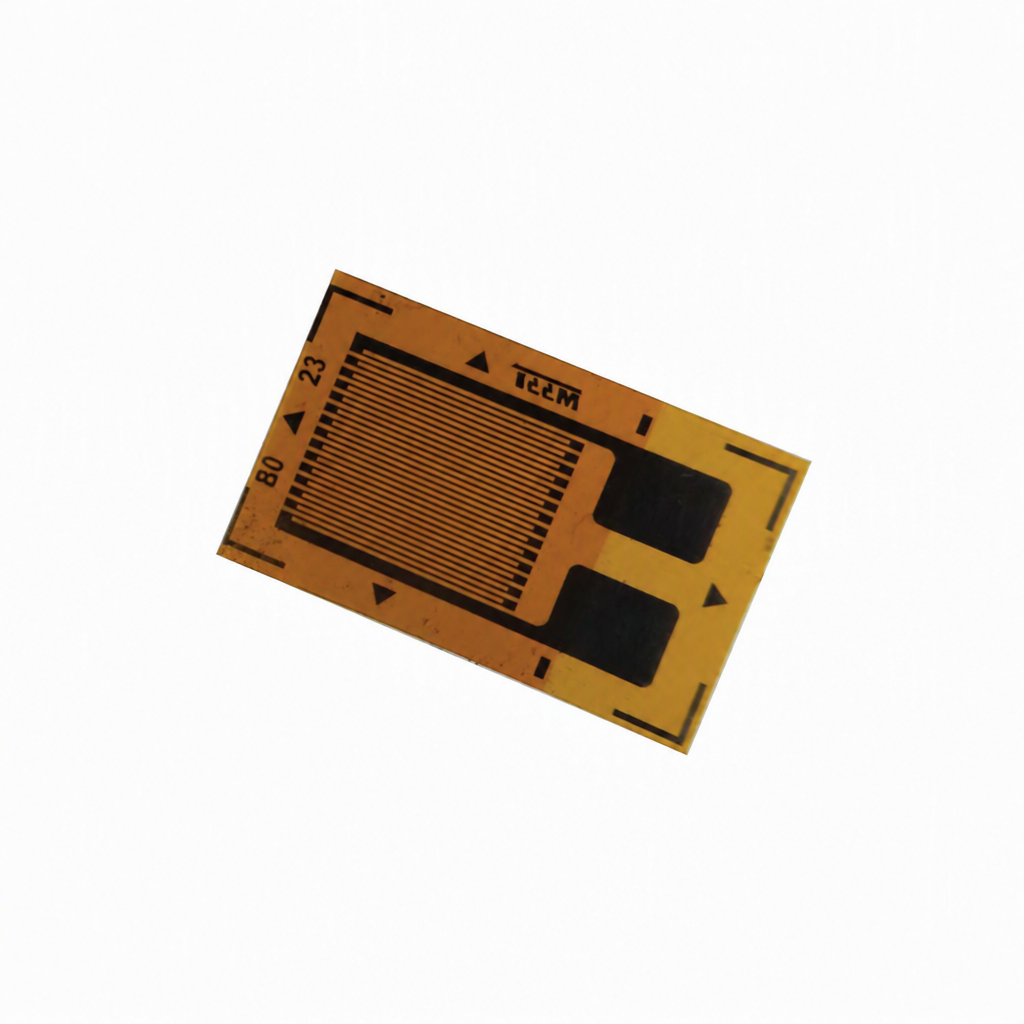
Strain Gauge
- Highly accurate flat force sensor, small in size
- Require complex circuitry, often requiring 3rd-party outsourcing
- Can be expensive to integrate
Advantages of FlexiForce Sensor Technology in Embedded Applications
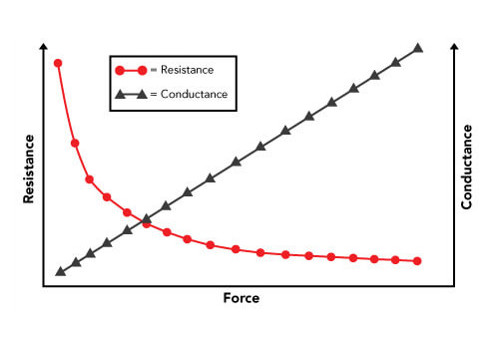
The FlexiForce sensor acts as a force sensing resistor in an electrical circuit. When the force sensor is unloaded, its resistance is very high. When a force is applied to the sensor, there is a proportional decrease in resistance. The conductance (1/Resistance) exhibits a linear response, as illustrated above. |
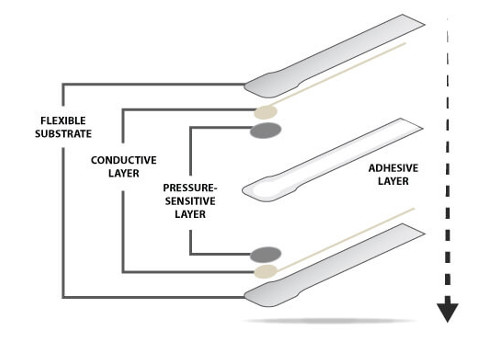
The unique construction of FlexiForce sensors brings the following advantages to your product design:
This article provides a detailed explanation of the difference between force sensing technologies. |