 Skip to main content


Measuring the Pressure of a Car Door Slam
What actually happens when you slam a car door?
Most people never think about it. But for automotive engineers, it's a serious design problem — because a vehicle door takes a real beating over its lifetime, especially when users routinely close it with more force than necessary.
The challenge is that this impact happens in a paper-thin contact zone — which makes it genuinely hard to measure. You can't just eyeball it, and pressure-indicating film only gives you a single peak reading before it has to be replaced.
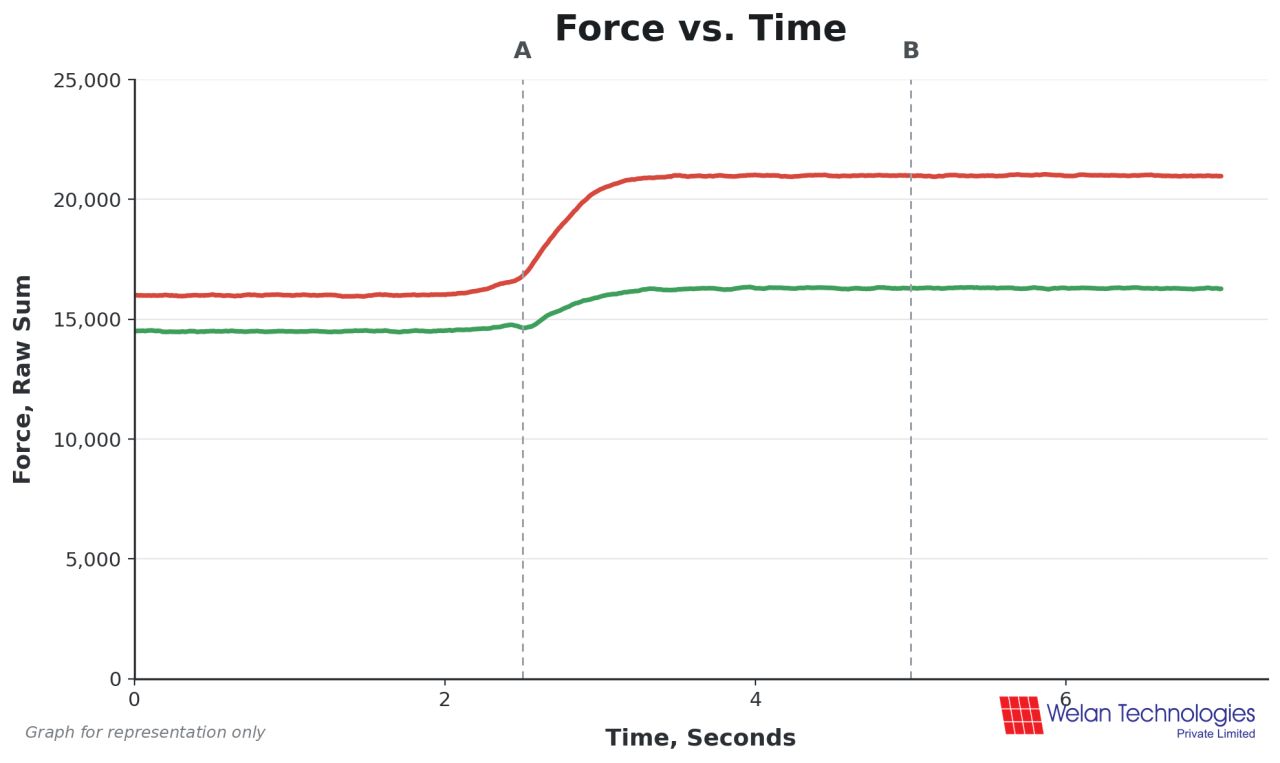
The I-Scan pressure mapping system was used on a recent project to benchmark vehicle doors — capturing the full door-slam event frame by frame, not just a single peak number. An ultra-thin sensor (0.01mm) sits in the contact area between the door and body, and every slam gets recorded as both a visual pressure map and a Force vs. Time curve.
That data told a more interesting story than we expected.
⚠️One door had that reassuring, "solid" sound people associate with quality. But it needed noticeably more closing force to fully latch — you can see it in the chart: the red curve settles at a much higher force plateau than the green one.
✅The other door felt lighter, almost unremarkable by comparison. No dramatic sound. But it closed with less force, and the pressure map showed a tighter, more consistent contact area across the seal.
The door that sounded better engineered was actually working harder to seal. The one that felt ordinary was doing it more efficiently.
That's the real value of frame-by-frame pressure mapping over a single peak-pressure snapshot — it shows you what's actually happening at the seal, not just what a person perceives in a showroom.
Our pressure mapping solutions provide objective, real time data in applications across the automotive industry.
Contact us to talk to an engineer for expert support in finding the right measurement solution for your pressure sensing needs.
*Thanks to our partners at Welan for sharing this I-Scan pressure mapping application story.
Post Categories: