Resources

Resources

Browse our library of pressure mapping and force measurement resources, including eBooks, Case Studies, On Demand Webinars, Whitepapers, and much more.

Displaying 1 - 10 of 21
Therapeutic Force-Feedback Device Design One company was developing a small force-sensitive physical therapy device aimed at tracking a patient's recovery progress after a specific medical event. Their mission was to empower patients on their journey to recovery by providing an innovative, user...

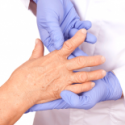
Background Many rheumatologists perform joint assessments by manually exerting pressure on an area with their thumb or two index fingers to elicit a response. It is generally assumed that fingers will "blanch" at around 4 kg/cm 2 of force, which is then used as a benchmark for the physician to...

Force Feedback Glove as Rehabilitation Solution Background: Over the past few years the World Health Organization has been nearing its goal to eliminate Hansen disease1 (also known as leprosy). Since most research and efforts related to the disease have been focused on prevention and discovering a...

Articles & Research

Advances in engineering have led to smarter medical devices, improved consistency among practitioners, and faster recovery time for patients. Force feedback is a crucial component in these advances and is made possible by thin, flexible, tactile force sensors.

Optimize Medical Device Functionality Challenge Manufacturers and researchers continuously strive to validate or improve efficiency and accuracy of medical devices and precision tools. Whether evaluating the effectiveness of a surgical apparatus or ensuring the fit of a health-monitoring device...

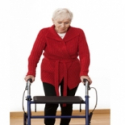
Smart Ambulatory Device designed with FlexiForce™ Sensors Background: According to the present edition of World Population Ageing, globally, the number of older adults (aged 60 or above) is expected to more than double from 841 million people in 2013 to more than 2 billion in 2050. This increase...

Articles & Research

A team of biomedical engineers at the Advanced Platform Technology Center (APTC) at the VA Medical Center in Cleveland have created a prosthetic hand using FlexiForce™ sensors from Tekscan, Inc.

FlexiForce™ Sensors Improve Hand Rehabilitation Device In 2013, a group of bioengineers and rheumatoid specialists in Cagliari, Italy designed a low-cost medical device that monitors the hand rehabilitation of patients diagnosed with Rheumatoid Arthritis (RA) and Systemic Sclerosis (SS). The device...

Articles & Research

A recent survey of medical device design engineers, conducted in April 2011 by medical device media company UBM Canon, revealed accuracy and cost as the two key attributes they seek in a force sensor when designing a new product.

Speech Pathologists Track Progression of Patient’s Speech Therapy with FlexiForce™ Traditionally, speech pathologists evaluate the health of orofacial muscles by asking a patient to contract their tongue against an imposed object, such as a gloved finger. In recent years, pathologists have sought...