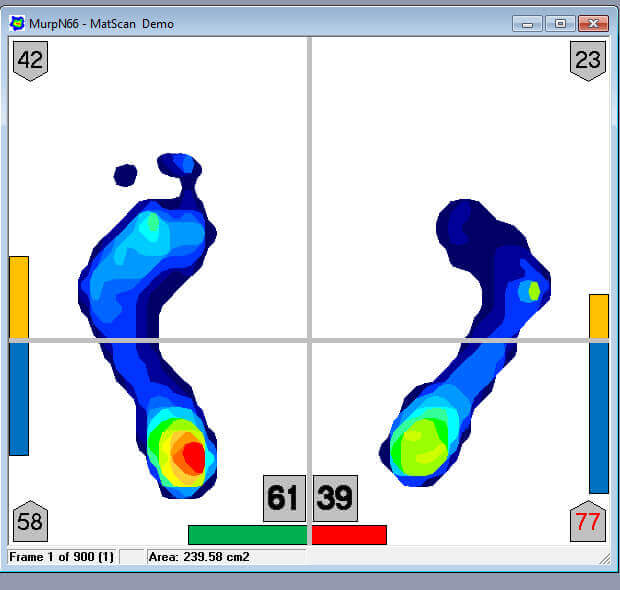



Balance & Stability
Balance and stability are the core of human performance; affecting every day functional activity, sports performance and rehabilitation.
 Skip to main content
Get quantitative data to improve a subject's balance, increase their agility, develop muscle tone and treat a wide variety of pathologies. With a wide variety of balance systems, Tekscan has a solution to help give you the objective data you need for a complete assessment.

Evaluate sway & postural stability |

Conduct fall risk assessments |

Objectively identify & evaluate chronic ankle instability |

Develop & track rehabilitation plans |

Perform injury risk assessments |

Perform comprehensive concussion assessments |
Whether you are looking to perform a static balance test, dynamic weight distribution, or evaluate balance related to sports or fall risk we have a solution for you. Our balance assessment tools allow you to:
Instantly Obtain Weight Bearing Information
Monitor Progress During Treatments
|
|
We use the Tekscan MobileMat™ with SportsAT™ exclusively with all of our research projects that involve a balance assessment component.
Thomas Kaminski, PhD, ATC, FNATA, FACSM, RFSA,
Director of Athletic Training Education at University of Delaware
Tekscan's solutions provide objective data for balance, sway and postural stability assessments. With several options available, the mats provide maximum flexibility for the types of applications and environments.
Portable SolutionMobileMat 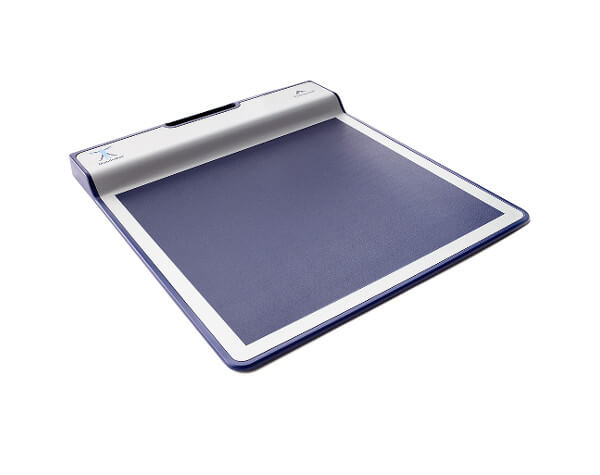
Easily transported for use on the field or in the lab. Standard or high resolution. |
Larger Surface AreaSB Mat 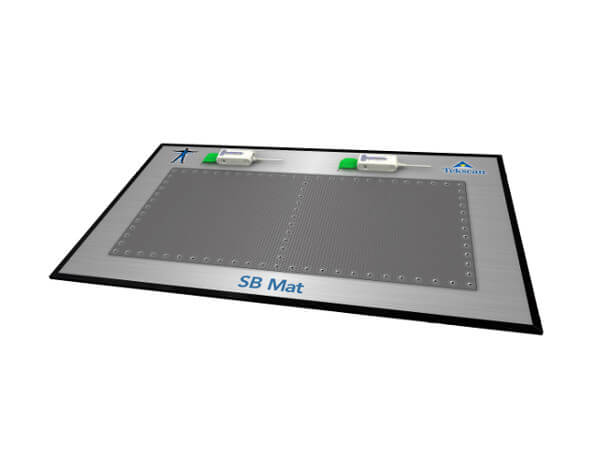
Accommodates dynamic balance testing, like lunges and squats |
 According to Brenton-Rule, et. al., using one of our automated systems reduces the rater error, 'due to postural sway values being captured by the measuring system and not the examiner, rater error and bias, which may be present in non-computerized tools, such as the swaymeter, was minimized'1.
1. Brenton-Rule, A., et. al. 2012. 'Reliability of the Tekscan MatScan Systems for the Measurement of Postural Stability in Older People with Rheumatoid Arthritis.' Journal of Foot and Ankle Research (August).
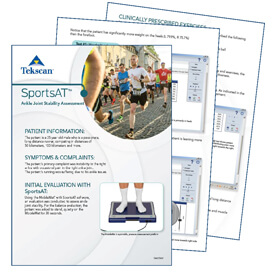
This case study demonstrates the importance objective measures for monitoring rehabilitation, especially in high level functioning athletes.

This case study demonstrates how essential data from SportsAT helped the clinician improve the patient's balance and reduce the sway as a result of lower extremity injuries.
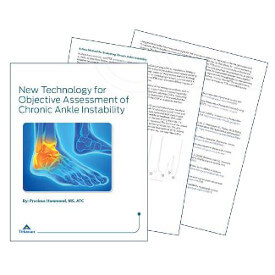
Download this whitepaper to learn more about time-to-boundary and the measurement tools you can use to objectively assess and manage chronic ankle instability.
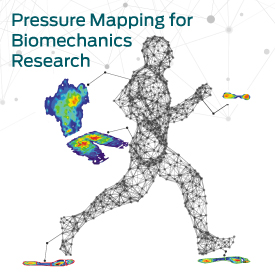
Are you working on a biomechanics research project? This eBook will provide a deep overview of Tekscan’s complete portfolio of technologies for biomechanics research, covering several applications and research examples.

Learn how you can transform clinical & research evaluations through pressure measurement systems!
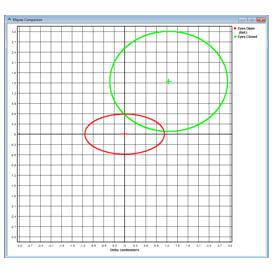
In this case, a patient was treated using chiropractic manipulations and the MatScan for displaced cervical vertebra and ribs, and blocked sacroiliac (SI) joint due to falls.
Download this eBook to learn more about technology to enhance outcomes for lower-extremity physical therapy & rehab patients.