 Skip to main content

FlexiForce Load/Force Sensors and Systems
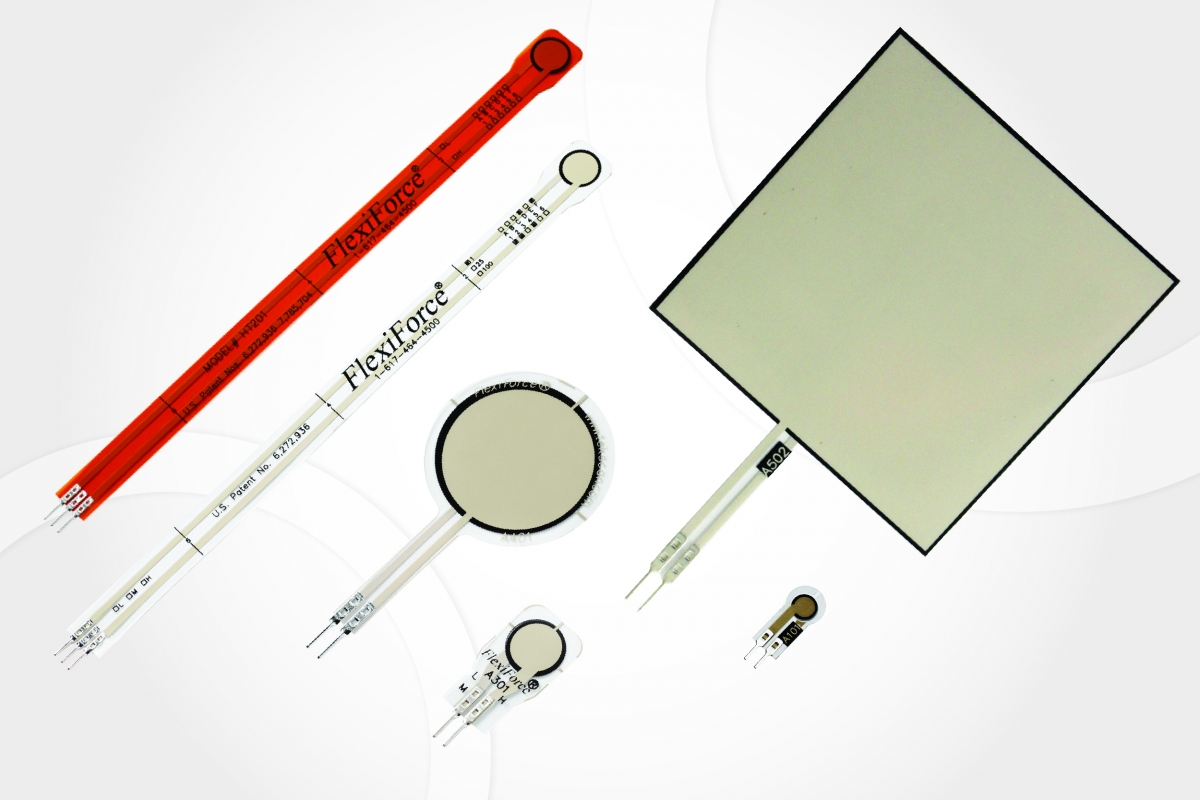
FlexiForce™ force sensors can measure force between almost any two surfaces and are durable enough to stand up to most environments. Our standard force sensors are available off-the-shelf for prototyping right away. We manufacture all our sensors in house, so we can customize to meet your specific requirements.
FlexiForce™ Sensors are:
|
 |
Choose from a Variety of Force Sensing Options
Whether you are a design engineer looking to embed a sensor into an OEM application, or you are conducting research where force measurement is important, we can offer a solution.
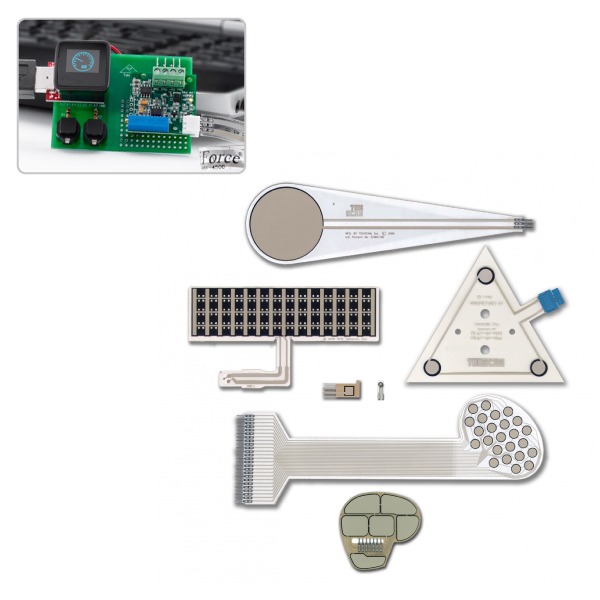
Embedded SensorsCustom force sensors and off-the-shelf kits for OEM applications
FlexiForce standard and custom sensors are easily integrated into products and applications. OEM customers looking to characterize the performance of FlexiForce sensors in a specific application often begin with our Prototyping Kit. |
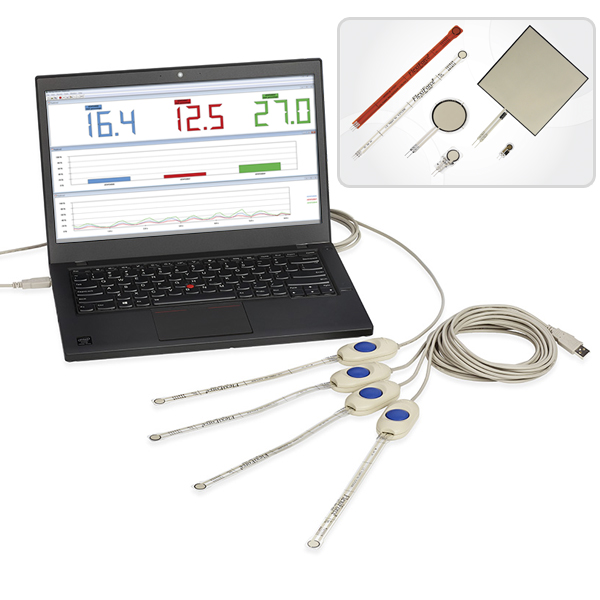
Test & MeasurementOff-the-shelf sensors and turnkey force measurement solutions
FlexiForce standard sensors can be used with a basic multimeter or simple op-amp circuit. We also offer the ELF System, a turnkey force measurement system often used in lab, university or R&D settings to measure, analyze, and verify products and applications. |
Why Choose FlexiForce?
FlexiForce piezoresistive sensors carry a variety of advantages over other force sensitive resistors, including:
- Superior linearity & accuracy (±3%)
- Expert technical guidance in custom solutions - Explore our Integration Resources
- Wider range of forces
- Sensor output is not area-dependent
- High temperature force measurements (up to 400°F) available with High-Temp model (HT201)
- Custom sensors are 100% tested to ensure they meet agreed-upon specifications
- We accept custom jobs with quantities as low as 1000 to as high as millions of sensors
Shop Online
Off-the-shelf force sensors, kits, and complete systems are available for online purchase.

Have Any Questions?
We can help you find or customize a sensor for your application.
