Skip to main content

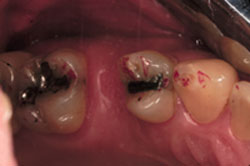
Abfraction Management with T-Scan
Learn how to use the T-Scan™ System to remove occlusal interferences that may lead to an abfraction issue.
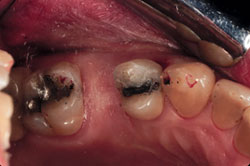
Excessive occlusal forces have long been reported to be a significant factor in decreased longevity of dental restorations, including Abfractions. Therefore, after Adhesive Restorative Dentistry, successful treatment requires Occlusal Adjustment Therapy.
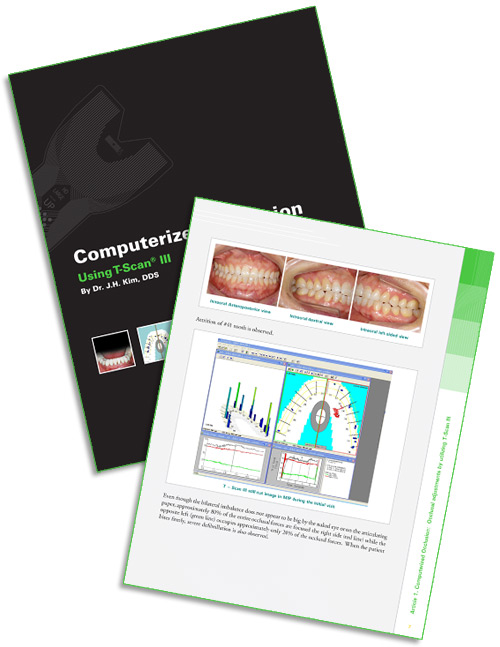
Free eBook! Computerized Occlusion: Using T-Scan™
See how including a bite test in occlusal exams and adjustments leads to improved abfraction management and clinical results.
How to use the T-Scan III to remove occlusal interferences:
- Simply have the patient bite down on the T-Scan thin, high density, disposable sensor. The resulting Force Movie shows where and for how long the abfracted tooth is not disengaging from its opposing tooth during excursions (Disclusion Time).
- A Disclusion Time of < .4 seconds insures lateral stresses are removed.
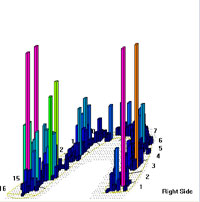
1. Pre-Treatment of interferences in excursion
a. Take a T-Scan excursive force movie and locate lateral interference(s). Enhance patient communication and treatment planning.
|
|
|
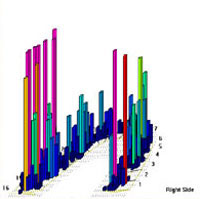
b. Use Accufim™ to mark areas of force and adjust.
2. Post-Treatment of interferences in excursion
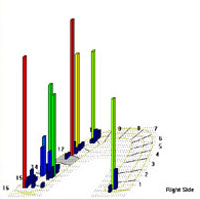
a. Record a new excursive force movie to verify interference is gone.
|
|
|
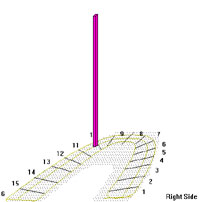
b. This stops cyclic compressions onto the CEJ, arresting the abfractive process.